
Resources Beliefs Kindreds and Holy Steads
Kindreds and Holy Steads
Summary
Many Heathens today have to study and practice on their own. But worship in the old days was communal, and when possible, it is good for Heathens to come together in groups for worship. For most of us, the decision to associate with other Heathens comes after we have made a connection with the goddesses and gods of the North. How does one find or choose a group to work with? What do tradition and experience have to say about creating kin?
Forming Kindreds, Hearths and Fellowships in Ásatrú
Many Heathens today still worship the gods individually, either because they can’t find a group where they live, or because the groups in their area are inhospitable for one reason or another.
The Internet has somewhat alleviated the loneliness that many Heathens felt in the early days; a Google search or some deft use of social media allows people to find fellow Heathens around the world. Yet most Heathens enjoy and benefit from sharing worship and fellowship in person with like-minded people when possible.
Although most of out textual descriptions of Heathen religion refer to public, communal rituals, we know that Heathens sometimes worshipped as households. The skaldic poem Austfararvísur describes a Swedish household in which a woman is leading a group of both men and women in a sacrifice to the álfar (ed. Fulk, p. 590). Vǫlsa þáttr describes household rites involving a preserved horse phallus (transl. Waggoner, “Tales from the Flateyjarbók VIII,” pp. 7-12).
The skaldic poem Austfararvísur describes a Swedish household in which a woman is leading a group of both men and women in a sacrifice to the álfar (ed. Fulk, p. 590).
We have a mention of a woman sacrificing inside her home at Hvammr in Iceland, while a Christian missionary is preaching outside (Þorvalds þáttr víðfǫrla I; ÍF 15.2, p. 73). Divination rituals were also held inside homes; the most famous is the account of Thorbjorg the seeress in Eiríks saga rauða 4, and another is described in Vatnsdoela saga 10. Þorvalds þáttr víðfǫrla depicts an Icelandic farmer who seems to have led religious rites for a “congregation” consisting of his entire household (Murphy, “Paganism at Home,” pp. 61-66).
Finally, after Iceland officially adopted Christianity, paganism was still allowed to be practiced at home á laun, “in secret” (Íslendingabók 7, ÍF 1, p. 17). If you are part of a family that is entirely Heathen, you can certainly hold rites together as a household. Some Heathens today refer to this as hearth cult. But not all of us live in such households.
We also know that Heathens from a wide area gathered at times of great feasts and sacrifices, such as the sacrifices at Uppsala (Adam of Bremen, History of the Archbishops IV.27, transl. Tschan, pp. 207-208) and Lejre (Thietmar of Merseburg, Chronicon I.17, transl. Warner, Ottonian Germany, p. 80).
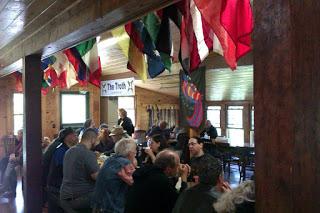
Today, Heathens and Heathen groups in a city, region, or country can certainly come together for important occasions. These could range from a couple of friendly kindreds getting together to celebrate a holiday, to regional gatherings, to national gatherings like Trothmoot.
Today, Heathens and Heathen groups in a city, region, or country can certainly come together for important occasions. These could range from a couple of friendly kindreds getting together to celebrate a holiday, to regional gatherings, to national gatherings like Trothmoot.

Some of us live alone, and others live in households that, for whatever reason, are not especially willing to adopt Heathenry unanimously. Our most common solution has been to create kindreds of people who come together for worship and fellowship. Even an entirely Heathen family may certainly join with other Heathens in a larger kindred.
Starting a Kindred
For brevity, this chapter will use “kindred” to mean any group of Heathens that gets together regularly for worship, study, and fellowship. Many Heathens feel that the word “kindred” should be reserved for groups that feel like kin—whose members have personal bonds with each other above and beyond a shared common interest in Heathenry. Such a relationship takes time and trust to build, and it is perfectly acceptable to begin as a looser group whose members are free to come and go as they please.
A less tightly-knit group might prefer to call itself a “study group,” “association,” “fellowship,” or some other neutral title. Groups with a strong focus on a specific Germanic culture might call themselves by a title drawn from that culture, such as lēod / lēode (OE “people”) or cynn (OE “kin”), or sippa / sibba (OHG “family”) or liut (OHG “people”). The Troth used to identify its affiliated kindreds as hearths (if they were not led by Troth clergy) or garths (if they were). The Troth no longer does this, but any group may use these titles if they wish.
Naming a kindred can be as difficult an undertaking as naming a garage band.
Diana Paxson noted that about fifty percent of kindred names mention either ravens or hammers, and came up with Raven Hammer Kindred as the perfect name for a fictitious kindred (Essential Ásatrú, p. 1). You can draw on the names, attributes, possessions, or symbols of any gods or goddesses that the kindred feels close to. Some kindreds may choose to take one particular deity as their patron and primary focus of worship, but this is not necessary; many kindreds honor all the gods and goddesses in turn.
Alternately, you can pick names that are drawn from the land where you live: a geographical feature, or a local animal or plant that seems significant.
Kindred Oaths
Some kindreds are founded by members taking formal oaths, but this is serious business and should not be done lightly, without careful discussion of what these oaths will entail and how people may be released from them.
Be extremely wary of swearing personal oaths to a kindred leader or any other person.
Oaths of loyalty to a leader who turned out to be abusive, unstable, or criminal have led to disaster on several occasions. Other kindreds may choose to define membership simply by participation. In any kindred, some members may need to leave, no matter how sincere their original commitment, whether because they find themselves called to another spiritual path, or because they and the kindred simply grow apart. If a kindred does decide to require oaths, they should be written in such a way that members may honorably be released from them and leave in friendship and mutual respect.
Leadership in a Kindred
A group of two or three people may not really need a leader as such, but may be able to make decisions by consensus.
As a group grows, it will probably be useful to appoint one person as an organizational leader. This leader may or may not be the spiritual or ritual leader as well; this is up to the kindred to decide. The way of choosing leaders, and the level of authority which the leader has, are also up to the kindred. It may be as simple as picking the member with the most conveniently located house, the largest and most discreet backyard, or the loudest voice to be the ritual leader. Leadership of rituals can also rotate or alternate among members.
The way of choosing leaders, and the level of authority which the leader has, are also up to the kindred. It may be as simple as picking the member with the most conveniently located house, the largest and most discreet backyard, or the loudest voice to be the ritual leader. Leadership of rituals can also rotate or alternate among members.
Heathenry does not require anyone to be ordained or otherwise titled in order to lead rites.
On the other hand, as with our cousin-religions have noted in their own communities, getting Heathens organized can resemble herding cats, and it helps immensely if the organizational leader has some talent for organization, and enough spare time to sit down and do whatever organizing needs to be done. Well-developed interpersonal skills are a definite bonus.
The Old Norse word for a Heathen priest is goði, with the feminine form gyðja.
In Iceland, the goðar (the plural form) built temples, maintained them, charged fees for their use, and became secular political leaders and lawmakers as well as religious leaders—an arrangement that persisted long after the adoption of Christianity. Some kindred leaders use goði or gyðja, or anglicized forms like gothi / godhi / godi and gythia / gydhia / gydja. This might be especially fitting in cases where the leader has both spiritual and organizational responsibilities.
Others might use fro or frowe, “lord” or “lady,” which implies a peaceful ruler; or drighten (m.) or drightine (f.), which would be used for the leader of a warband. Some kindreds just go with modern English titles like “chieftain.” Unlike some Wiccan traditions, it is not necessary to have both a male and a female Priest and Priestess; kindreds may be led by persons of any gender.
Kindred Gatherings and Rituals
Kindreds should gather on a regular basis to meet the spiritual needs and to some extent the social needs of their members.
At a minimum, this includes celebrating a set of main holidays in the year. For a typical kindred, these would probably be Yule, Ostara/Sigrblót, Midsummer, and Winternights, plus whatever others the kindred decides on. Kindreds should also celebrate the passages of life for their members, such as birth, coming-of-age, marriage, and death. Many groups also meet at least once a month for rites, study, and social interaction.
A kindred might sponsor classes in the lore, crafts, or other knowledge, or perhaps hold field trips. Kindreds can also offer their members mutual aid; the kindred should pitch in, if possible, if a member has to move house or do home maintenance. And not every meeting has to have a serious religious purpose. A kindred may certainly celebrate any modern-day rituals of building frith and fellowship that its members enjoy, whether it’s the Feast of Bowling, Pizzablót, or Catchamovienacht.
At a minimum, this includes celebrating a set of main holidays in the year. For a typical kindred, these would probably be Yule, Ostara/Sigrblót, Midsummer, and Winternights, plus whatever others the kindred decides on.
Growing a Kindred
It’s up to the kindred to decide how eagerly they want to recruit new members. Kindreds that recruit many people rapidly have been known to implode when it turns out that some of the new folks were, for whatever reason, a poor fit. In areas where the prevailing social ethos is hostile to Heathenry, kindreds may not be able to seek new members openly, and may need to “fly under the radar.” Other groups may simply feel more comfortable staying small. It’s fine to keep your kindred small and private, if that is best for your situation.
If you do feel ready to try to grow, a good way to begin is to host regular, publicly advertised classes or study groups in public spaces, such as your local public library or pagan store.
You can also host regular pubmoots at local pubs or restaurants. Such meetings can be advertised through social media, but it may still be worthwhile to leave notices or business cards at local pagan stores or other friendly venues.
Avoid publicizing your home address; there are always people out there who have no business knowing where you live.
You will also probably want to set up a separate e-mail address and social media accounts for kindred business, both to keep your kindred business separate from your work and personal accounts, and to maintain your personal privacy.
The Troth will try to help; we have a network of local representatives, known as Stewards, who try to network with Troth members and other Heathens of good will. Your nearest Stewards will help you contact Heathens in your area if they can—although sometimes they may not know of any Heathens in your area, or the Heathens in your area may not be interested in contacting anyone.
It will probably take a while for you to start getting people to show up at events. This is normal. Please don’t get discouraged. Some people will eagerly accept your invitations and then always find something else they have to do on that day. Others may show up once and never be seen again. Others might be excellent people, but just feel shy or intimidated about getting in touch.
Persevere! Do whatever you can to accommodate interested people who have disabilites, long travel distances, unusual or irregular work hours, or other obstacles to participation.
Once you get a few regulars that you get along with well, you can decide who might be offered membership. Many kindreds have probationary status for new members, ranging from three months to a year and a day.
As Heathens, we are required to be hospitable to our guests, but admission into the Kindred itself is something that does and should take some time.
As a kindred grows, its leader must not be left to take on more responsibilities all by themselves. Heathenry has historically had a problem with leaders putting in heroic efforts to advance their kindred and their faith—until they burn out. We really can’t afford this.
Members of a growing kindred should be willing to step in and take a share of the workload, both spiritual and organizational. Different groups may divide the workload in different ways.
As we’ve stated, there’s no requirement in Heathenry in general that anyone has to be “ordained” to lead a valid rite, so members may wish to take turns writing and leading rituals. A trusted member with good judgment might serve as Thul / Thyle, an advisor to the leader and “sergeant at arms” in ritual. An especially lore-wise member, or at least the one with the largest library, might be named Loremaster or some similar title, acting as a teacher and/or consultant on lore matters.
Organizational officers will also become important as the kindred grows. Leaders can and should designate “vice-chieftains” (or whatever term is desired) to take over if the leader is absent for any length of time or decides to step down. Once the kindred begins to handle money of its own, it will need to designate someone as Treasurer, and provide some means of fiscal oversight.
Some kindreds develop a hierarchy with various ranks that reflect members’ experience and responsibilities in the kindred. This is especially visible in Theodish Belief and groups that were inspired by it.
Eagles’ Reaches Kindred, which was prominent in the early days of the Troth, had more ranks and titles than they had members—and each rank and title had its own specific colors and trim of ritual tunic and trousers (Ymir Thunarsson, “Heathen Houston,” p. 37). Most kindreds seem to feel they can get by with a simpler structure, with no formal ranks except, perhaps, a distinction between probationary and full members.
Regardless of structure, growing kindreds will want to draw up at least simple by-laws that define the responsibilities of its officers. These by-laws must also establish a procedure for making decisions and resolving disputes fairly. If the kindred is trying to incorporate under US state laws (which may be necessary to establish a bank account), or is trying to file for nonprofit tax-exempt status, it will need to file formal by-laws and establish a slate of officers and directors. Details of these requirements vary from state to state (and from country to country, of course).
As a kindred grows, its leader must not be left to take on more responsibilities all by themselves. Heathenry has historically had a problem with leaders putting in heroic efforts to advance their kindred and their faith—until they burn out. We really can’t afford this.
Sustaining a Kindred
Heathen groups, like other organisms, have a life-cycle, and like any other relationships, kindred relationships evolve and change over time. Some groups begin with fervent commitment, but last only a few years before imploding. Others may begin with much more modest ambitions, but manage to continue for decades. External circumstances, personality conflicts, and ideological differences can all potentially threaten a kindred’s survival.
Life happens. If the kindred is small, having a member transfer to another city can drop the numbers below what is sustainable, especially if that member was doing a large and important part of the work. However, such a loss doesn’t have to be traumatic. Provisions may be made to recognize distant members who are still considered part of the fellowship, even if they can no longer meet in person.
If it is the group leaders who move, those who remain will have to decide whether they want to stay together. Death, especially the death of a leader, has a similar effect, with the addition that seeking advice by e-mail is no longer an option. (On the other hand, there is plenty of precedent in the lore for treating deceased members as álfar or dísir and asking their blessing and protection for the kindred.) It is wise for a group leader to train a second in command who is not in his or her household.
Major events in our lives can also affect the group’s development.
A kindred of childless adults will change if some of them start families, or if new members with children enter. The kindred may now need to plan for childcare and/or children’s activities, meet in child-friendly places, and accommodate parents’ schedules. (Not that you have to completely give up meeting in pubs and drinking till closing time, if that’s what you like.
Just make sure you schedule enough family-friendly events that members with kids don’t feel shut out.)
As the kindred ages, or if members have physical conditions that limit their mobility, activities may change. That blót held atop a mountain peak may be a beautiful idea for a group of fit twenty-five-year-old Heathens, but perhaps not so much for members who are sixty, or who have severe arthritis.
Life happens. If the kindred is small, having a member transfer to another city can drop the numbers below what is sustainable, especially if that member was doing a large and important part of the work.
Handling Conflicts
Personality conflicts can threaten a group’s survival. Breakups or divorces within a kindred run the risk of breaking the frith, and it is crucial that leaders and members not be forced to take sides (unless there is clear evidence that one partner is abusing the other or otherwise is truly in the wrong). Unless the split is unusually mature and friendly, one partner will probably leave the kindred. Animosity between members can be corrosive.
Sometimes a leader or another respected person can manage conflict resolution, especially if the group is large enough that people who don’t get along will not have to be in close contact, but in many cases the group or leader will have to ask one or the other to leave. Accusations should be carefully investigated, if necessary, by a neutral party, to determine whether the problems are the result of personality conflict or actual wrongdoing. This is why a group should be very careful what kinds of oaths it exacts from its members; if it requires oaths, there must be a way for members to be released from them without dishonor.
If two factions in a kindred are otherwise good and honorable people who simply can’t get along with each other, the solution may be for the kindred to divide amicably. There is no reason why there must be only one kindred in a city or region.
Unfortunately, growing kindreds sometimes attract toxic personalities.
People with strongly held sociopolitical views may attempt to use the kindred as a vehicle to advance their own ideologies at the expense of worship and fellowship; this author has seen white supremacists attempt to do this sort of thing. There are “drama addicts” of various sorts, who gain satisfaction from stirring up strife. People with abusive personalities may seek power over others for its own sake. And people struggling with substance abuse or certain types of mental illness deserve compassion and help, but sometimes they may need more help than the kindred is able to provide.
This is why you’ll almost certainly want prospective members to undergo a probationary period. Your by-laws also need to include procedures for expelling members who are damaging the frith. You don’t want to have to do this very often, but sometimes there is no other alternative if the kindred is to stay together at all. Situations like these can be a major test of the leader’s mettle; an explosive falling-out can poison the local community for years afterwards.
Ideological conflicts do occur.
A kindred can seek to avoid misunderstandings by clearly articulating its stand on such issues as the admission of members who are LGBT+ or not ethnically European.
The Troth is firm in its position that ethnicity, physical ability, gender identity, and sexual orientation have no bearing on whether someone has the right to practice Heathenry, and we hope and expect that our members understand this.
That said, we’re well aware that some of those that practice Heathenry disagree. We would hope that kindreds could make their views clear from the outset, so that no one ends up attending for some time before getting the rude shock that the kindred is not the sort of group they thought it was.
Kindred members can also differ honorably on all sorts of political and social issues, and people’s opinions on these can and do change over time. The best advice we can give here is mutual respect, focusing on what unites the kindred rather than what divides it. Constructive kindred relationships depend on honor, integrity, respect, and clear communication.
Small kindreds may not need to accumulate their own monetary reserves or make financial decisions. But as a kindred grows, it will probably need money to do things like rent facilities for meetings and feasts. Any financial transactions between members should be clearly defined. If members contribute money to support the kindred, whether as membership dues, voluntary donations, or one-time levies to defray costs, the money needs to be handled transparently and accounted for honestly. The same goes for mutual aid; kindred members should help each other with problems when they can, and if one kindred member loses a job or is hit with huge bills, the most appropriate aid may be money—but there are many ways that this can go wrong.
One possibility might be for the kindred to operate like a fraternal order (Elks, Odd Fellows, Woodmen, etc.) and build up an emergency fund that can be disbursed to members in need according to a standard formula that everyone agrees on. But however this is handled, the money needs to be accounted for carefully, with independent audits of the kindred’s finances. Few statements in the lore are more true than the Old Norwegian Rune Poem’s Fé vældr frænda róge, “Money causes strife of kinsmen.”
While we don’t want to stand in the way of true love, or even honest lust, romantic and sexual relationships within a group are another potential source of conflict and should be treated with care and discretion.
Every Kindred member must respect the other members’ personal autonomy; if Hagbard asks Signy to go out with him and Signy says no, that must end the matter right then and there. If Hagbard keeps pressing unwanted attentions on Signy, the rest of the kindred may have to step in. It would be a very good idea for a kindred to develop a sexual harassment policy and have all members sign it; that way there is no question as to where the line is drawn.
Group leaders, in particular, must make every effort to avoid even the appearance of exploitation.
Virtually every faith tradition has had problems with leaders who have used their power to coerce members into sex. If a kindred leader tries to use their status, knowledge, and trust as a way to push members into sexual relationships, leave the group immediately. Absolutely nothing in modern Heathen ethics or practice requires anyone to surrender bodily autonomy or personal freedom.
There is evidence that ritual nudity and even ritual sex were practiced by our forebears at some times and places—but these were restricted to specific practitioners, roles, and situations; they are not something that everyone was expected or even encouraged to do. Such things need to be handled even more carefully today. No one should ever be strong-armed into doing something they don’t want to do because “it’s part of our ancient tradition” or “it’s an initiation into the Mysteries” or anything like that
Children in a kindred should participate in activities as fully as they are able. As they grow, they will come to make their own decisions about their own lives, and it’s possible that they won’t stay Heathen. This happens. Children should never be coerced into participating in Heathen events. On the other hand, ideally, our children will grow up knowing our myths, beliefs, and practices, and accepting them as something that “normal people” do. Kindreds with children should sponsor children’s activities at gatherings, such as games or crafts. Rituals can be written so that children who are old enough can take roles.
IMPORTANT: Children must be safe in Heathen spaces.
Child abuse is a dire crime, as well it ought to be. People who abuse or excuse the abuse of children are monsters. All children ought to be cherished and nurtured in this world. and Heathen Kindreds ought to strive to create spaces where the responsibility for caring for children is a central part of the Kindred.
If children are taking part in kindred activities, basic precautions include never allowing an adult to be alone with a child, for any reason. Children at kindred gatherings should be supervised by everyone, or at least by several adults who can watch each other. It may or may not be feasible for all kindred members to undergo a background check, but certainly if you have members who are designated to work with children, they should undergo a background check.
The Boy Scouts of America makes its training modules for leaders available to the general public (“Youth Protection Training Modules”), and these might be useful for Heathens who work with children, both for protection against sexual abuse and for protection against other problems that can arise among children, such as bullying. Heathen kids should be taught from an early age, as appropriate to their understanding, that they have the unquestioned right to bodily and mental autonomy, and that they can and should tell trusted adults if anyone attempts to violate that autonomy. If the worst should happen, all kindred members should consider themselves to be mandatory reporters and be prepared to report abuse to law enforcement. While the resulting investigation could damage the kindred, covering it up will lead to far worse consequences.
Going Public
Just how much public exposure a kindred should have is a question that needs to be discussed as the kindred grows. While the “Satanic Panic” of the late 1980s has mostly faded (for now), and there is more acceptance of non-mainstream religions than there used to be, there are still people who would risk losing their employment, family ties, or reputation if it became known that they were Heathen. Kindreds must respect their members’ need for privacy, and must be careful not to casually “out” members or publicize their membership records.
On the other hand, some kindreds may be able to engage in more public outreach—not only to find new members, but to build good relationships with the wider community, both pagan and secular. Taking part in food drives, disaster relief, or similar endeavors not only benefits the wider community, it helps your kindred build its good name and good will. Some leaders have joined interfaith organizations for clergy, or participated in public interfaith discussions.
Remember that there is a lot of bad information about Heathenry out there, and there are white supremacists using Heathenry as a way to spread their own foul ideology. It is good for Heathen individuals and kindreds to take public roles to counter these misconceptions, slanders, and smears, if they can do so safely and effectively. What you want is for your neighbors to be saying things like, “Well, I don’t know much about those gods they worship, but I do know that they busted their butts right alongside my church group when we had to clean up after that tornado, and they brought a whole vanload of food and supplies when the community food bank sent out the call, and I’ve seen them picking up litter out on Highway 64. . .”
If a group does get some publicity—hopefully positive publicity—it may find that some of its members may simply not be good at dealing with the public, or the media. They may be poor speakers, or naturally introverted, or simply not be gifted at explaining things to an audience. This is perfectly fine; we’re all different people with different strengths and aptitudes. Painfully shy people should not feel browbeaten into taking public roles that they are not suited for. You may need to designate a person to take charge of public outreach, who may or may not be the kindred’s leader. You may also need to designate a person to be in charge of Internet outreach, answering e-mails and creating a social media presence; this person may or may not be the same as the overall public outreach director.
Kindred members acting in public roles or talking to the press should dress and speak conservatively. This is not the time to flaunt your resplendent Viking garb, your wildly spiked beard, your two-handed war axe, your naked valkyrie tattoos, or your piercing runic galdors. News organizations often focus on what their viewers will find entertainingly wacky, but this is not likely to get you the sort of reputation or publicity that you want. Business or “business casual” dress, with perhaps a modest pendant or lapel pin showing a Hammer or other holy symbol, is the look that’s needed here. If you look like a professional, you’re more likely to be treated as one. Making professional-looking kindred business cards with contact information would also not be a bad idea.
Aside from charitable work in the community, one way to engage in outreach is to hold at least a few rites that are open to the public. Don’t hold these in members’ homes; look for parks with picnic shelters, or fraternal organizations that own facilities that you can rent. Note that rented facilities may have certain policies on whether you can bring alcohol, and local laws may also limit public alcohol consumption. Some Heathens like carrying swords or axes, or incorporating them in ritual, and these may also be subject to legal regulation. One now-legendary gathering in the early days of the Troth was abruptly ended by law enforcement because a passer-by got spooked by the sight of a Heathen carrying a ritual axe (Gyori, “An Axe in the Park!”, Idunna 5, pp. 49-50). Be prepared to leave the ale and weaponry at home. Your nearest Society for Creative Anachronism (SCA) group may know of places in your area where you can drink alcohol and carry medieval weaponry, if that’s something you feel is important.
Another form of public outreach may be to offer classes at your local pagan shop or other venues. Many universities and colleges offer at least one course in “World Religions” or something like that; consider contacting the professor and volunteering to come speak to the class. Setting up a booth at your nearest Pagan Pride Day celebration is another way to do public outreach (and helping with event planning is an excellent way to cultivate friendships in the pagan community). Kindred members who make crafts can sell them there, and any members who are good at rune divination can give readings. Otherwise, you can hand out flyers, give workshops, hold a ritual, and/or just be available to chat.
One thing you can do in advance is prepare an “elevator speech.” Because people will ask you what it means to be a Heathen or Ásatruar.
Doing public outreach, you can expect to meet every kind of person—from people who were completely unaware that anyone could still worship the old gods; to people who have been worshipping the old gods on their own for years and had never found anyone else who felt the same way.